- Develop the ability to observe, decode, and interpret emotions and attitudes.
- Raise awareness of the importance of body language in human interactions.
- Learn to better express and manage one’s own emotions.
- Understand the impact of non-verbal communication.
- Encourage reflection on interpersonal relationships and professional posture.
- Realistic scenarios where they act, exaggerate, and analyze emotions and attitudes.
- Photo and video challenges to observe and interpret facial expressions, postures, and tones of voice.
- Fun exercises to test their non-verbal reading skills.
- Teamwork, sharing perspectives, and immediate peer feedback.
- Collective debriefs that spark insights and engaging discussions.
Over a limited time (2–3 hours), students participate in a team-based competition featuring over 40 photo and video challenges, intentionally more than can be completed.
The challenges encourage them to:
- Observe attitudes, expressions, and emotions.
- Step into different situations.
- Simulate, exaggerate, analyze, and interpret behavior.
- Compare their perceptions with those of others.
A short introduction allows them to start the experience, followed by intense gameplay and a thorough debrief to analyze learning outcomes.
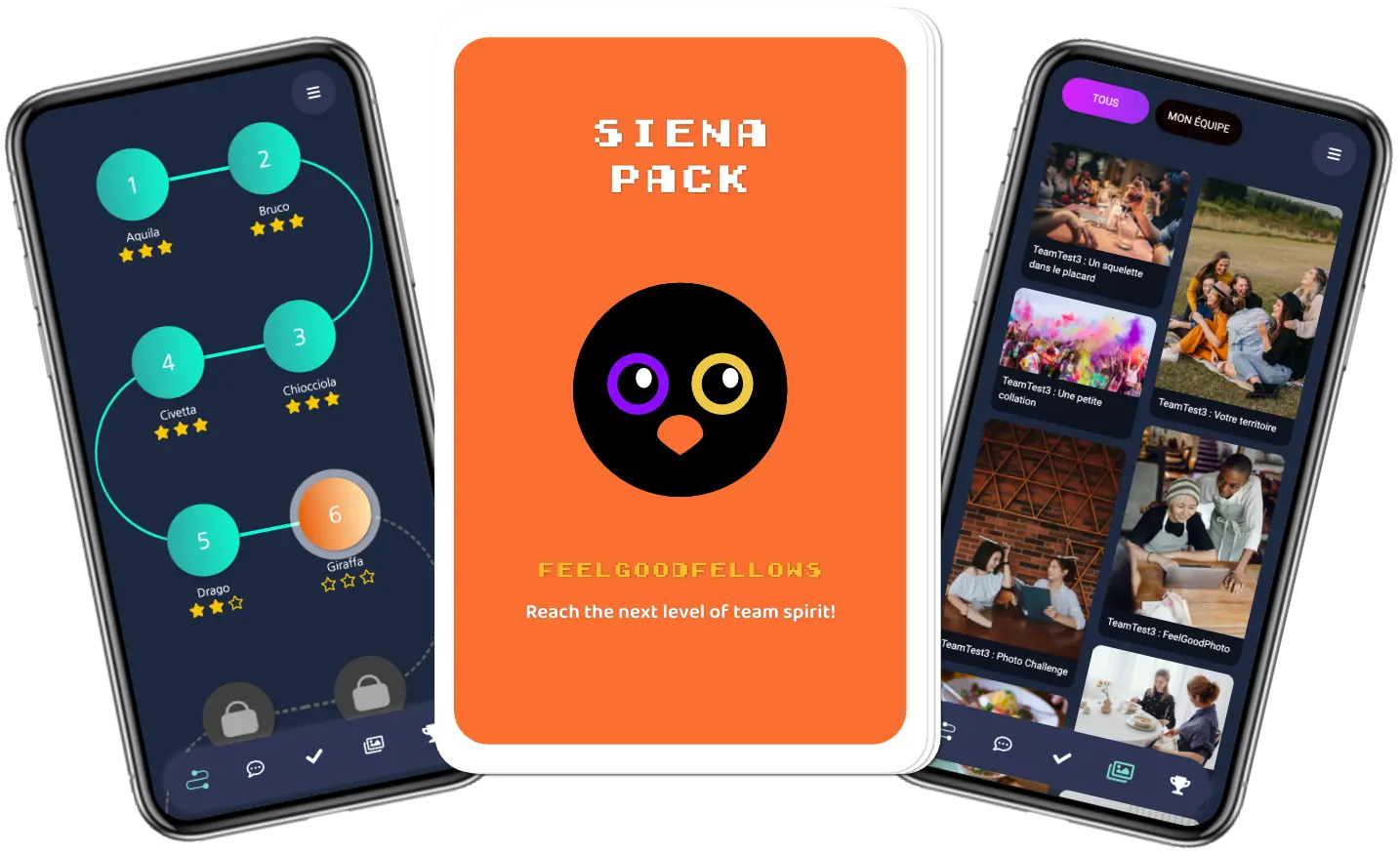
After a brief introduction and platform connection, students are divided into teams and given access to their list of challenges.
Throughout the experience, they must:
- Observe facial expressions, postures, gestures, or intonations.
- Interpret emotions from photos, videos, or sentences.
- Role-play to experiment with different attitudes.
- Compare analyses and debate interpretations.
Challenges alternate between observation, action, and reflection, creating a dynamic and engaging rhythm.
The experience concludes with a collective debrief (recommended: 45 minutes or more) to review achievements, share insights, and consolidate learning.
- Better understanding of body language.
- Awareness of the importance of emotions in interactions.
- Students become more attentive to their own posture and that of others.
- Richer and more nuanced exchanges in communication situations.
- Reflection on emotional and relational management.
This experience is designed for higher education students of all levels.
It is particularly relevant for:
- Programs in management, human resources, or leadership.
- Courses related to human relations, communication, or business.
- Students who will frequently interact, manage, persuade, or collaborate.
It can be integrated:
- Into a soft skills module,
- During a themed day,
- Or as an experiential workshop complementing theoretical learning.